
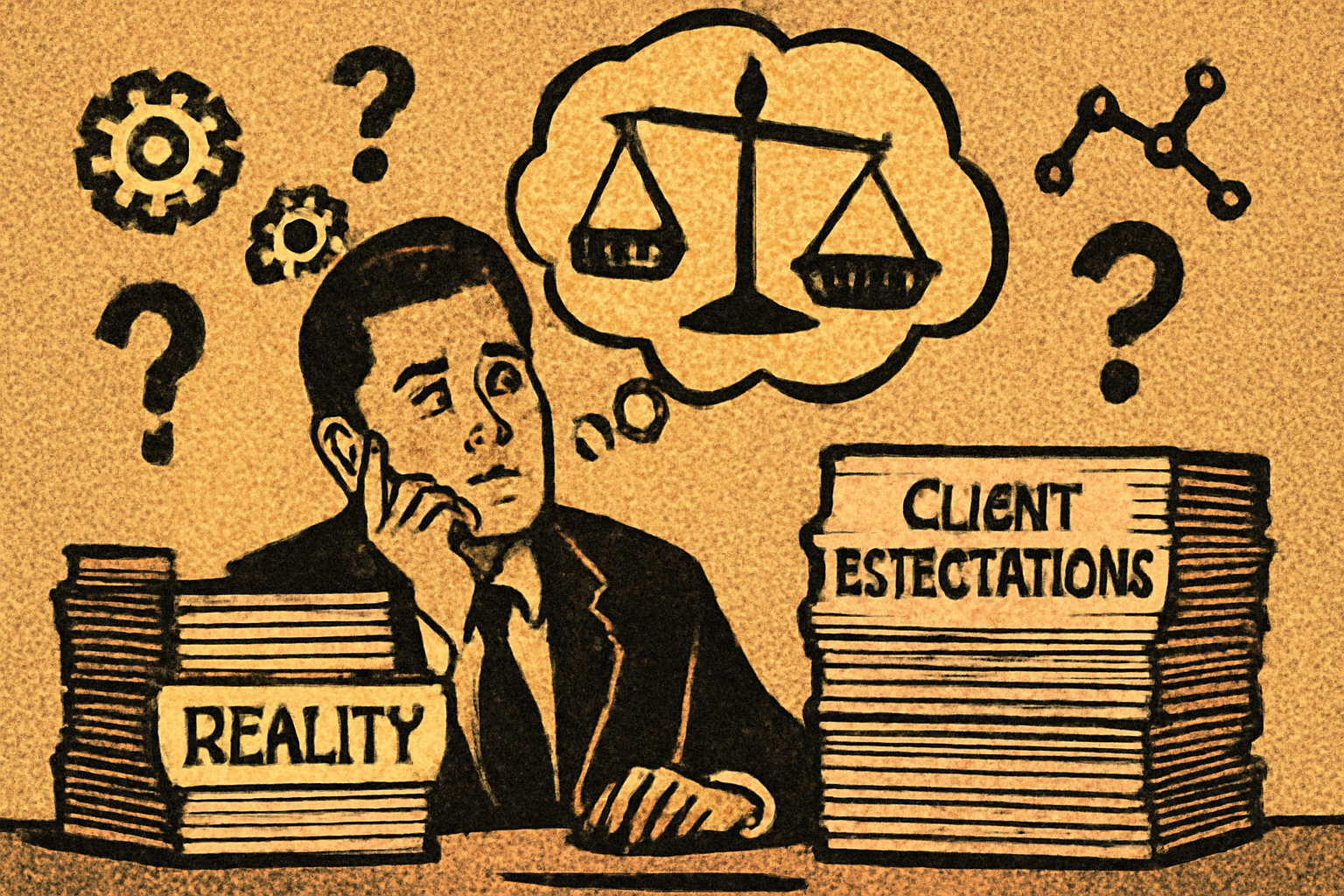
In the consulting field, professionals often face the dilemma of balancing truth with client satisfaction. This balance is critical to maintaining long-term relationships, preserving integrity, and ensuring project success. Here’s a breakdown of how to address the tension between these two priorities:
- Understanding Client Needs and Expectations:
- Start by thoroughly understanding the client’s business objectives and cultural context. This foundational knowledge allows consultants to anticipate how certain truths will be received and how they might be articulated to align with client expectations.
- Clear Communication:
- Establish open channels of communication from the beginning. Setting expectations early about transparency and the nature of consultant-client communication can prepare the client for truthful insights that may not align with their initial expectations.
- Providing Constructive Feedback:
- When presenting less favorable facts or challenging conclusions, frame these within the context of achieving the client's ultimate goals. Use data-driven insights to support claims and provide actionable recommendations to accompany any negative assessments.
- Building Trust through Integrity:
- Consistent honesty builds credibility. Clients are more likely to appreciate honest feedback if they trust that the consultant has their best interests at heart. Always substantiate claims with evidence to maintain transparency.
- Managing Client Reactions:
- Anticipate potential pushback and be prepared to manage reactions through empathy and negotiation. Being receptive to their concerns and demonstrating empathy can help soften the impact of hard truths.
- Balancing Short-term and Long-term Gains:
- Weigh the immediate discomfort of delivering a hard truth against the potential long-term benefits for the client’s organization. Breeding a culture of honesty can lead to deeper partnerships and repeat business.
- Reputation Management:
- Consider the implications for the consultant’s reputation. Consultants known for integrity are often more respected in their field, attracting clients who value genuine and impactful engagements over those purely focused on satisfaction.
By integrating these strategies, consultants can navigate the complex interplay between delivering truths and maintaining client satisfaction, fostering relationships that lead to impactful and sustainable consulting outcomes.